




When Strength Looks Like Staying

Quiet Strength Series — Part 2
Not every difficult decision in life is about leaving.
Sometimes, the harder one is staying.
This is something Kavya understood slowly, not as a conclusion she arrived at one day, but as something that became clearer over time. From the outside, her life did not look like it required courage. There were no visible disruptions, no dramatic shifts, no decisions that others would immediately recognize as difficult. Everything seemed to be moving in a direction that made sense.
And yet, there were moments when she questioned herself.
Not loudly. Not in a way that demanded immediate answers. Just small pauses where she wondered whether she was choosing comfort over growth, or patience over avoidance.
The thought came and went, but it never stayed long enough for her to sit with it fully.
Kavya had been married for nearly fifteen years. Like most relationships that last that long, it had moved through phases. There were years that felt easy, almost effortless, where conversations flowed and decisions felt shared. And then there were years that required more adjustment, more understanding, more silence than she had expected when she was younger.
Nothing about her marriage was broken.
That was the part that made it difficult to explain, even to herself.
There was no single issue she could point to, no conflict that demanded resolution. It was simply that the relationship had changed in ways that were not always visible but deeply felt. Conversations had become more functional than personal. Time together existed, but not always in the way she once imagined it would.
If someone had asked her directly whether she was unhappy, she wouldn’t have said yes.
But she wouldn’t have said no either.
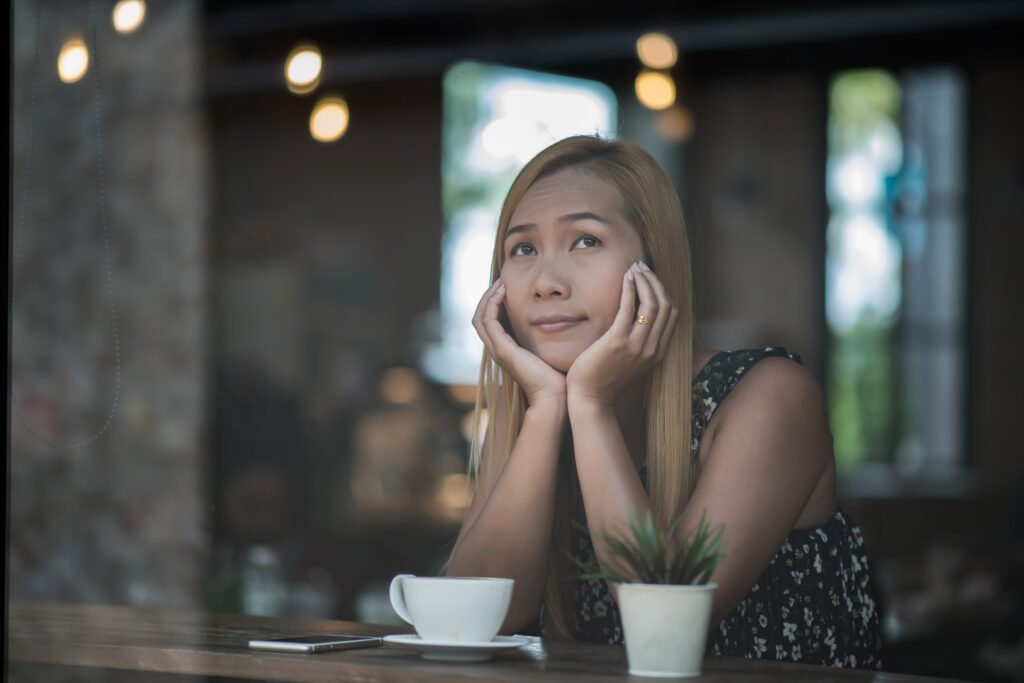
The Pause Within

Choosing to Stay
At different points, the thought of change had crossed her mind. Not necessarily leaving, but shifting something, asking for more, addressing what had quietly settled into the background.
Each time, she paused.
Part of that pause came from practicality. There were children to consider, routines that worked, a life that had been built over years. But another part of it came from something less obvious.
Sometimes strength is not in leaving – it is in choosing to stay with awareness.
Uncertainty.
Not about what was missing, but about what would happen if she tried to change it.
What if the conversation made things more complicated?
What if she was expecting something unrealistic?
What if this phase was simply part of a longer relationship?
These questions did not come from fear in an obvious sense. They felt like careful thinking, like the kind of reflection that comes with experience.
So she stayed with what she knew.
Over time, she began to notice something about herself.
Staying was not passive.
It required attention. It required choosing not to react immediately when something felt off. It required understanding when to speak and when to wait. It required holding space for another person’s way of being, even when it did not always align with her own.
This was not the kind of strength she had imagined when she was younger.
Back then, strength looked like action. Like making decisions, taking control, changing circumstances.
This felt different.
Quieter.
Less visible.
There were moments when staying felt heavier than leaving would have been.
Moments when it would have been easier to step away from discomfort instead of sitting with it. Moments when silence felt like effort, not ease. Moments when she wondered whether choosing to remain was simply delaying something inevitable.
But those moments did not define everything.
Because there were also other moments.
Small, almost ordinary ones.
A conversation that unexpectedly felt lighter. A shared understanding without needing to explain everything. The familiarity of knowing someone’s patterns so well that even their silence made sense.
These moments were not dramatic enough to outweigh the difficult ones in an obvious way.
But they mattered.
It took time for Kavya to understand that staying is not always about endurance.
Sometimes, it is about intention.
Not staying because you are unable to leave, but staying because you are still willing to be present. Still willing to understand. Still willing to see whether something can shift without forcing it.
That willingness is not easy to sustain.
It asks for patience without guaranteeing outcome. It asks for emotional effort without immediate reward. It asks you to remain engaged even when things feel uncertain.
And that is where its weight lies.
There is a common belief that courage is always visible.
That it shows up in bold decisions, clear actions, and undeniable change.
But there is another form of courage that does not look like movement at all.
It looks like staying in a space that is not perfect, but not broken. It looks like continuing to invest in something that requires effort, even when it would be easier to withdraw. It looks like choosing to remain open instead of closing off.
This kind of strength does not announce itself.
It does not seek recognition.
It simply exists in the way someone continues to show up.
Kavya did not think of herself as someone being courageous.
If anything, she often questioned whether she was doing enough, whether she was avoiding something she should confront more directly.
But over time, she began to see her choice differently.
She was not staying because she was afraid to leave.
She was staying because she was still willing to be there.
And that difference, though subtle, changed the way she held her decision.
There is no final answer to her story.
She has not reached a point where everything feels resolved or perfectly aligned. There are still days that feel uncertain, still moments where she questions herself, still conversations that remain unfinished.
But she continues.
Not out of habit.
Not out of fear.
Just out of a quiet understanding that some things are not meant to be decided quickly.
And that sometimes, strength is not in changing direction, but in holding your place with awareness.
About The Author