

How Our Children Reflect Our Own Unhealed Wounds
There are moments in parenting that surprise us. Not the big moments people usually talk about, the first day of school, the report cards, the milestones. Those are expected. You prepare for them.
The moments that truly catch us off guard are much quieter.
A sharp reply from your child that feels strangely personal.
A behaviour that irritates you far more than it should.
A reaction inside you that feels disproportionate to what just happened.
And sometimes, in those moments, you realize something uncomfortable. Your child hasn’t just triggered your patience. They’ve touched something deeper. Something that didn’t begin with them.
The Mirror We Don’t Expect
Children have an unusual way of holding up mirrors. Not intentionally. They’re simply being themselves, reacting, learning, pushing boundaries the way all children do.
But sometimes their behaviour reflects parts of us we haven’t fully understood yet. A child who hesitates to try new things might remind you of your own childhood fears. A child who questions authority might challenge beliefs you were taught never to question. A child who demands emotional attention may unknowingly touch a place in you that once felt neglected.
And suddenly, what seemed like a parenting challenge begins to feel more personal.
The Reactions That Feel Bigger Than the Moment
Many parents recognize this pattern without always naming it. A small incident creates a surprisingly strong reaction. Your child forgets something simple, and frustration rises quickly.
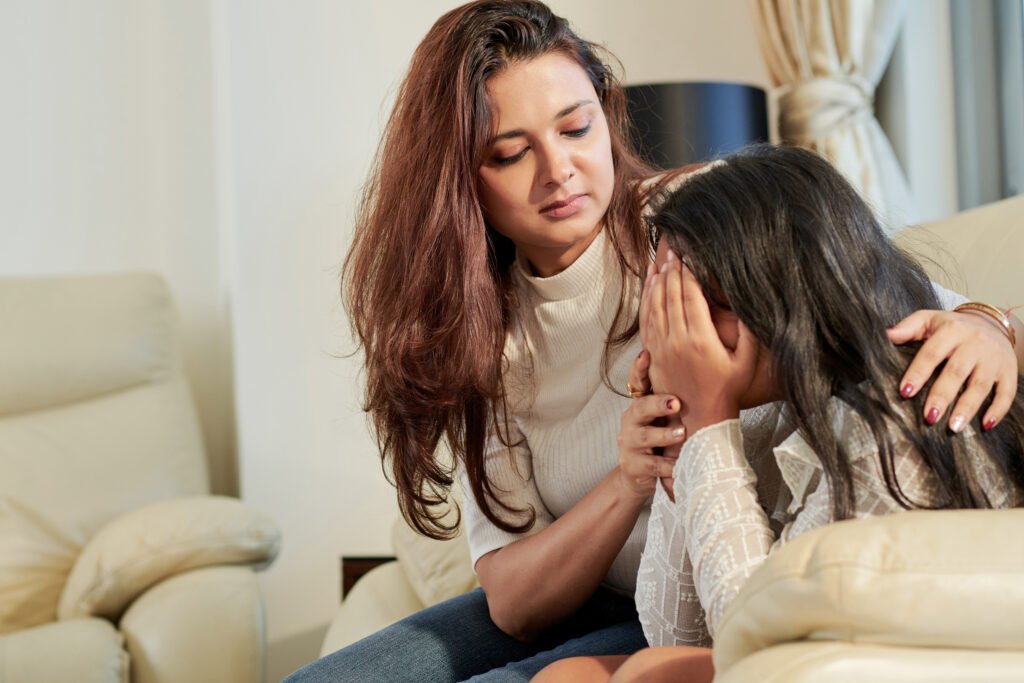
The Trigger Moment
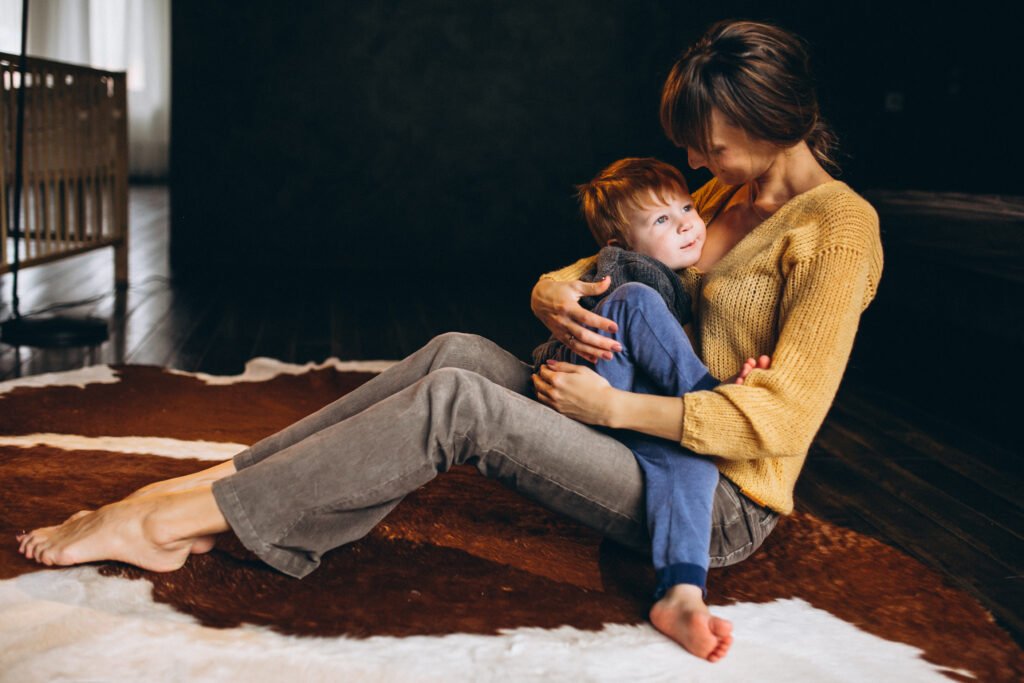
Breaking the Pattern
They express anger, and it unsettles you more than expected.
They withdraw emotionally, and it brings an uncomfortable feeling you can’t quite explain.
Sometimes our children are not testing us — they are revealing parts of ourselves we never fully understood.
Often, the intensity of the reaction isn’t really about the child. It’s about what the situation reminds us of. Memories we didn’t consciously revisit. Experiences we once minimized.
Emotional needs that were never fully acknowledged. Children don’t create these feelings.
They reveal them.
The Childhood We Carry Forward
Every parent brings their own childhood into the parenting experience.
The way we were disciplined.
The way affection was shown.
The expectations that surrounded us growing up.
Some of those experiences shaped us positively. Others left questions we never fully answered.
Perhaps you grew up in a home where emotions were rarely discussed.
Perhaps achievements were valued more than feelings.
Perhaps conflict was avoided rather than resolved.
Those early environments become part of how we understand relationships — often without us realizing it.
And when our children behave differently from what we experienced, it can feel unfamiliar, even uncomfortable.
The Moment of Recognition
For many parents, there comes a moment when they recognize the pattern. It may happen during a simple conversation. Your child expresses a feeling openly, something you were never encouraged to do at their age. Instead of feeling proud, you feel slightly uneasy.
Or your child resists a rule, and your first instinct is to react strongly. Later, you realize the situation reminded you of how strict your own upbringing was. These moments are not failures in parenting. They are invitations to understand ourselves better.
The Difference Between Reaction and Awareness
The truth is, parenting can bring emotional layers to the surface that we didn’t know were still there. But awareness changes the way we respond. Instead of reacting automatically, we begin asking different questions.
Why did this moment affect me so strongly?
Is my reaction about my child, or about something older within me?
These questions don’t always have immediate answers. But they shift something important. They create space. And in that space, parenting becomes less about control and more about understanding.
Breaking Patterns Quietly
Many of us grow up promising ourselves that we will parent differently from how we were raised. But patterns are complicated. They live in habits, tone of voice, expectations we absorbed over decades. Recognizing those patterns takes time. Sometimes we catch ourselves repeating something we once disliked. Sometimes we realize we are reacting the way our parents did, even when we thought we wouldn’t.
The difference is awareness. Once you see the pattern, you can slowly choose something different. Not perfectly. Just gradually.
Children Are Not Responsible for Our Healing
One important truth is worth remembering. Children may reveal our wounds, but they are not responsible for fixing them. Their role is not to help us process our past. Their role is simply to grow into themselves. The responsibility of reflection belongs to us.
That reflection doesn’t have to be dramatic or heavy. Often it begins with small moments of honesty.
Acknowledging a reaction.
Apologizing when needed.
Pausing before responding.
Over time, these small choices shift the emotional atmosphere of a home.
Parenting as Self-Discovery
Perhaps one of the most unexpected aspects of parenting is how much it reveals about us. We begin the journey thinking we are shaping our children.
But slowly we realize they are shaping us too.
They challenge our patience.
They expand our empathy.
They reveal where we are still learning.
And sometimes they gently guide us toward parts of ourselves that were waiting to be understood.
The Quiet Opportunity
When we see our children reflecting parts of our past, it can feel uncomfortable at first.
But it also offers something meaningful.
An opportunity to respond differently.
An opportunity to understand ourselves more honestly.
An opportunity to create emotional patterns that are healthier than the ones we inherited.
Not because we are perfect parents. But because we are willing to learn. And sometimes, that willingness is the most powerful gift we can give our children.
About The Author